







What is better to choose an old used heat exchanger or a new one?
Somehow our company was offered to buy, for the purpose of resale, a heat exchanger made in the 70s of the last century, as we were told, in good condition. There are customers who are still ready to buy such equipment, choose the price, and not the correct and reliable operation of their system. Today we can manufacture two or even three highly efficient and reliable heat exchangers of the same power and almost the same total weight of the heat exchange surface.
As an example, we installed heat exchangers model OPEKS PTA (GX)-42 at a central heating unit with a surface margin of 10%. When the customer was convinced that everything was working within the design load, he asked us why your heat exchange area is 2.5 times less, with the same parameters, than in the dismantled plate heat exchangers 50 years ago?

The answer is simple. In old heat exchangers, they could not, or perhaps did not want to, make a heat-exchange stainless plate less than 1 mm thick, could not provide a relief of a complex shape with the number of corrugations 2 times more per 1 m2 of heat exchange area. The heat transfer coefficient of a modern heat exchanger is 2-3 times higher. Time does not stand still, the efficiency of the equipment is growing, and the material consumption is decreasing.
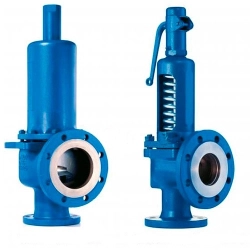 Safety valve LESER 441/442 DN20/32
 Individual heating station of the heating system according to an independent connection scheme
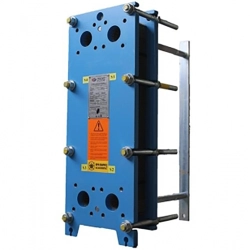 Plate heat exchanger THERMAKS РТА (GC)-16, 10 plates
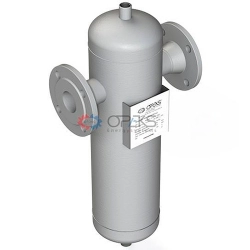 Centrifugal steam separator OPEKS-1-SC16-1-F50
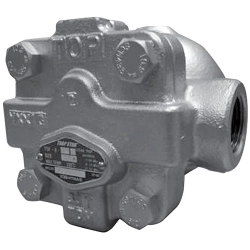 Float steam trap Yoshitake TSF-8-5 DN15
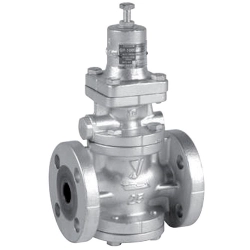 Reducing valve for steam Yoshitake GP-1000EN DN50 А/0.05-0.9MPa
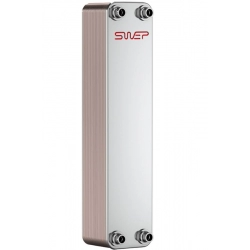 Brazed heat exchanger SWEP B25T
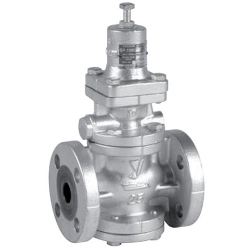 Reducing valve for steam Yoshitake GP-1000EN
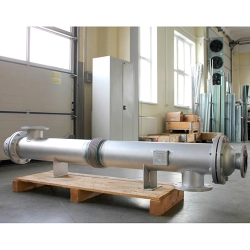 Shell and tube coolers
